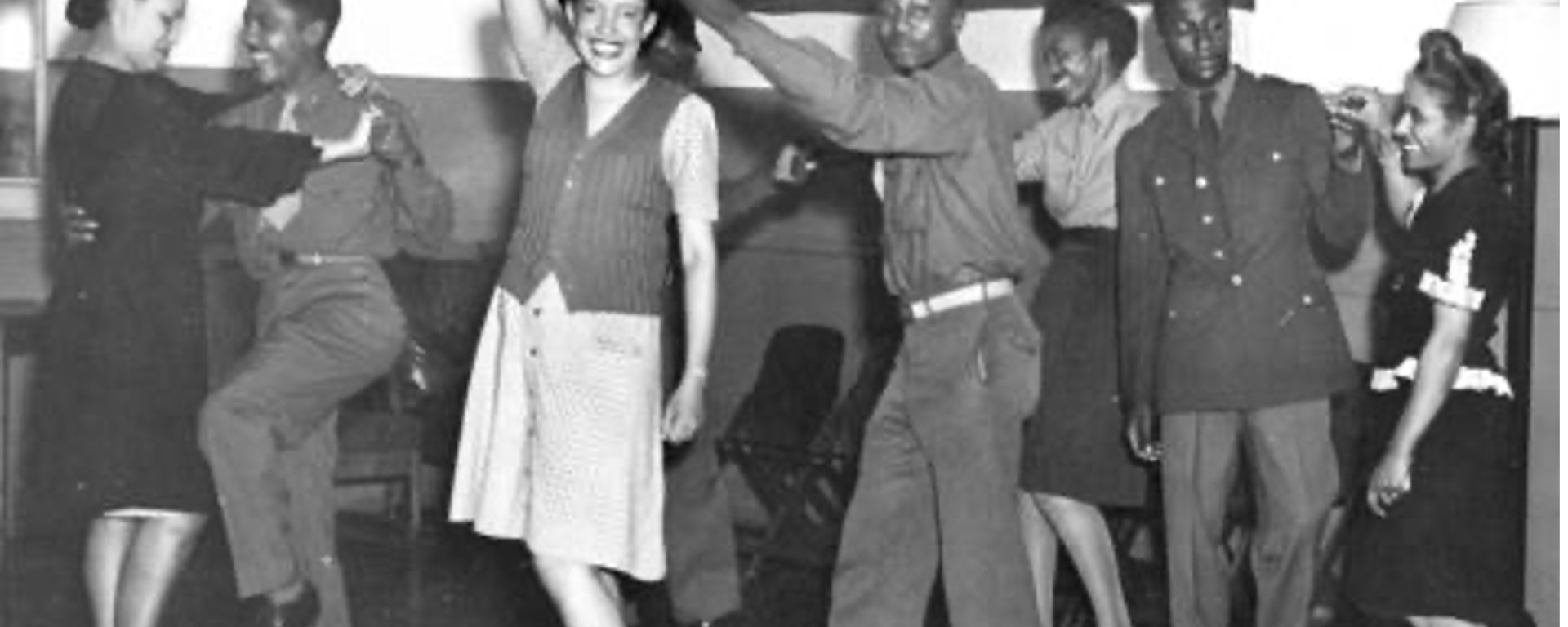
— by Sydney Jaxon
For those who are unaware, let us begin with what USO stands for: United Service Organizations. The USO is an organization that serves active-duty service members and military families. Originating in 1941, the purpose was to provide recreational activities and resources for our troops. This was a great idea, as the 1940’s was a tumultuous time for the United States, right smack in the middle of World War II. The issue that followed in the expansion of USO’s across the country is that our military was racially segregated during this time. The policies that were implemented in the USO forbade discrimination based on race or creed. Although the USO believed in serving all service men and women regardless of race that was not always met with welcomed thoughts from others in the community, so there had to be alternative options.
1942, USO #2 is born
Two USO clubs were opened in the beginning of 1942 for white service men and women in Tacoma. It wasn’t until September of the same year that a USO was set to open to serve Black soldiers and their families. This USO was known as USO #2, and was opened in a commercial building at 713 Commerce Street.

USO #2’s Special Guest
If you have ever seen the movie Pearl Harbor you will remember a seeing Cuba Gooding Jr. in a few scenes. The person that Cuba Gooding Jr. was portraying was Doris (Dorie) Miller. Dorie Miller was on one of the ships when the Japanese military launched an attack on Pearl Harbor, and helped pull several sailors from debris, carrying them to safety. Finding other ways to assist while chaos was ensuing, Miller spotted an empty 50-caliber machine gun that he used to help take down enemy planes. Due to these heroic actions at Pearl Harbor, Miller was the first African American sailor to be awarded the Navy Cross which is the second highest naval award for heroism during combat. In 1943, USO #2 was lucky enough to host Dorie Miller to Tacoma. They welcomed him with a big party to celebrate, everyone knew his story and looked up to him.

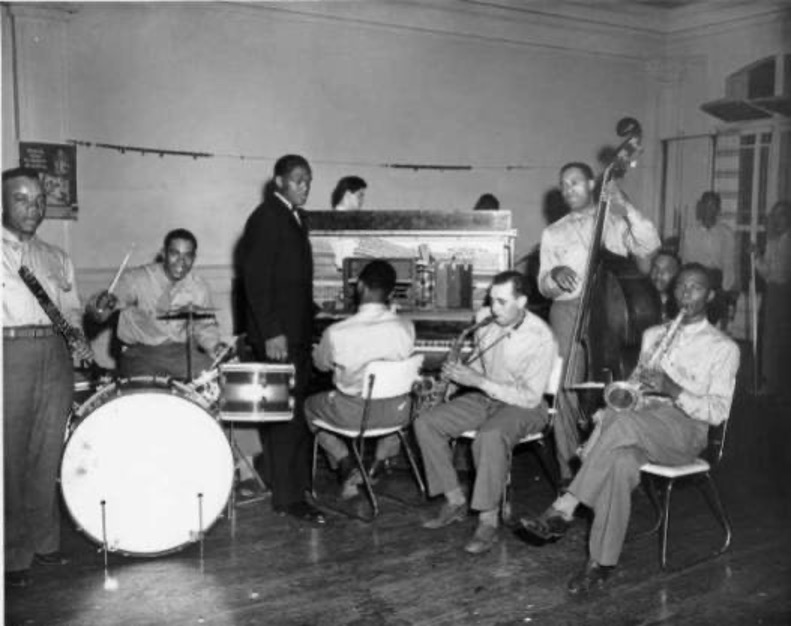
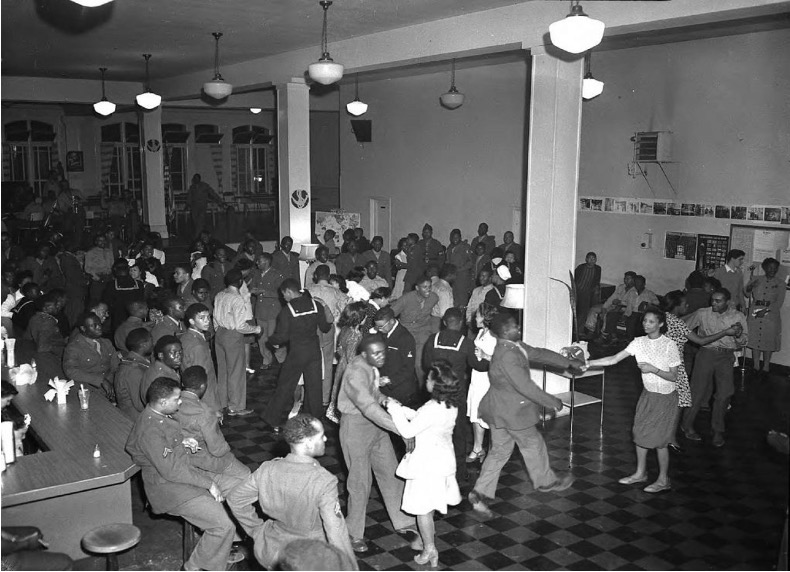
Photographs from Dorie Miller’s visit to Tacoma’s USO #2. Courtesy Tacoma Public Library.
Trail Blazers in Tacoma
It’s safe to say that there is not a shortage of incredible people that helped make Tacoma what it is today. One of those people is Helen B. Stafford. Ms. Stafford came to Tacoma in 1926 a few years after earning her degree from Kansas State University. A humanitarian and leader in civil rights it only makes sense that Stafford had a part in providing a recreational space for our Black soldiers to have. Her efforts with the USO #2 assisted almost 1 million soldiers to have access to recreational spaces like game rooms, music rooms, showers and sleeping accommodations.

USO #2 makes sure there is fun for ALL.
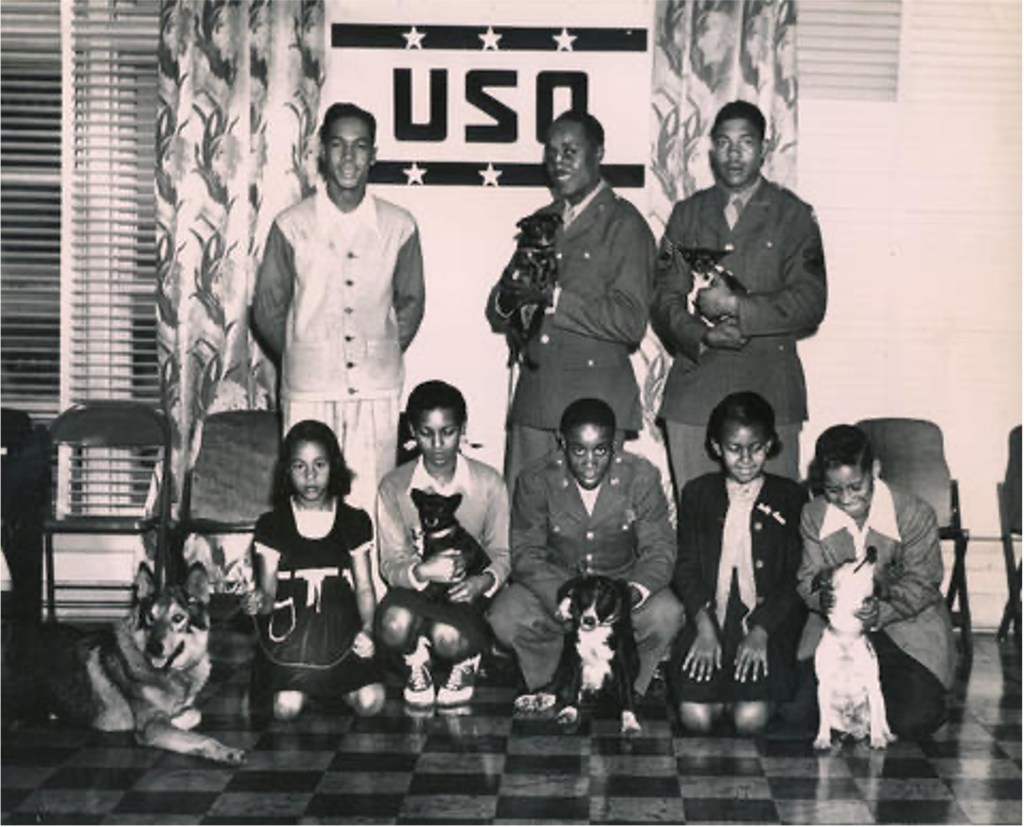
The USO was a place for entertainment and leisure for servicemen and women and the members of their families: fur babies included. The USO hosted many activities for soldiers and their families to enjoy, one of those activities being “Be Kind to Animals” week. A dog show was planned to include the dogs of the local children with ribbons presented to the “Best” dog in each category. The photograph below shows servicemen and children posed with several dogs at USO #2 (Courtesy Tacoma Public Library).
Although this was a time of racial segregation in the military that did not stop white members of the community from supporting Black soldiers. The photographs below (courtesy Tacoma Public Library) shows Lincoln High School’s a cappella choir performing at the USO #2 for a Mother’s Day program on May 9, 1943, as well as an unidentified violinist performing at the venue.


There were many resources and services available at the USO #2, one of the main purposes was to celebrate holidays and festivities with the servicemen who were stationed here in Tacoma. The following photograph (courtesy Tacoma Public Library) shows a group of servicemen pictured in front of a Christmas tree at the USO #2.

Looking through these photographs it is evident that the USO #2 had a huge impact on Black soldiers, and the city of Tacoma. The fact that Black soldiers were going overseas to fight for a country’s freedom when they weren’t even awarded those same freedoms at home is a tough reality to face. However, from what I have seen in these photographs and stories, the USO #2 was a positive environment that recognized these brave heroes and honored them in the same way as the white soldiers. Although the military and the USO clubs were still segregated during that time, a soldier’s race was not going to stop the community from honoring and supporting our Black service men and women. We can continue to honor them by sharing these stories.
Further Reading
Two USO clubs open in Tacoma on February 9, 1942.
How the USO Served a Racially Segregated Military Throughout World War II.
About the Author
Sydney Jaxon prepared this article as her final project for TARTS 225: Musical History of Tacoma, taught by Kim Davenport at the University of Washington, Tacoma. At the time she took the class in Autumn Quarter 2023, she was a senior majoring in Criminal Justice.
 Tales of Tacoma